
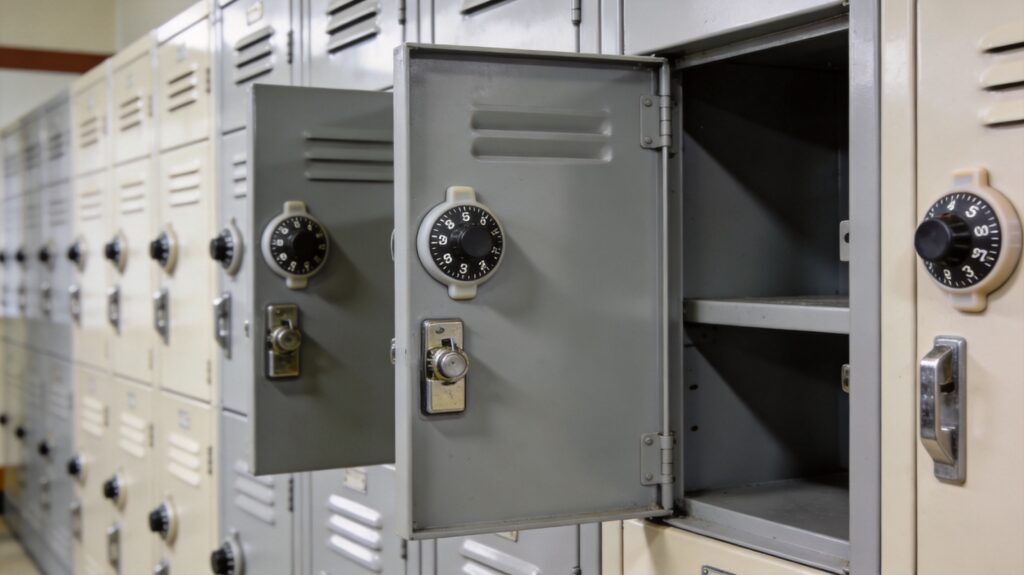
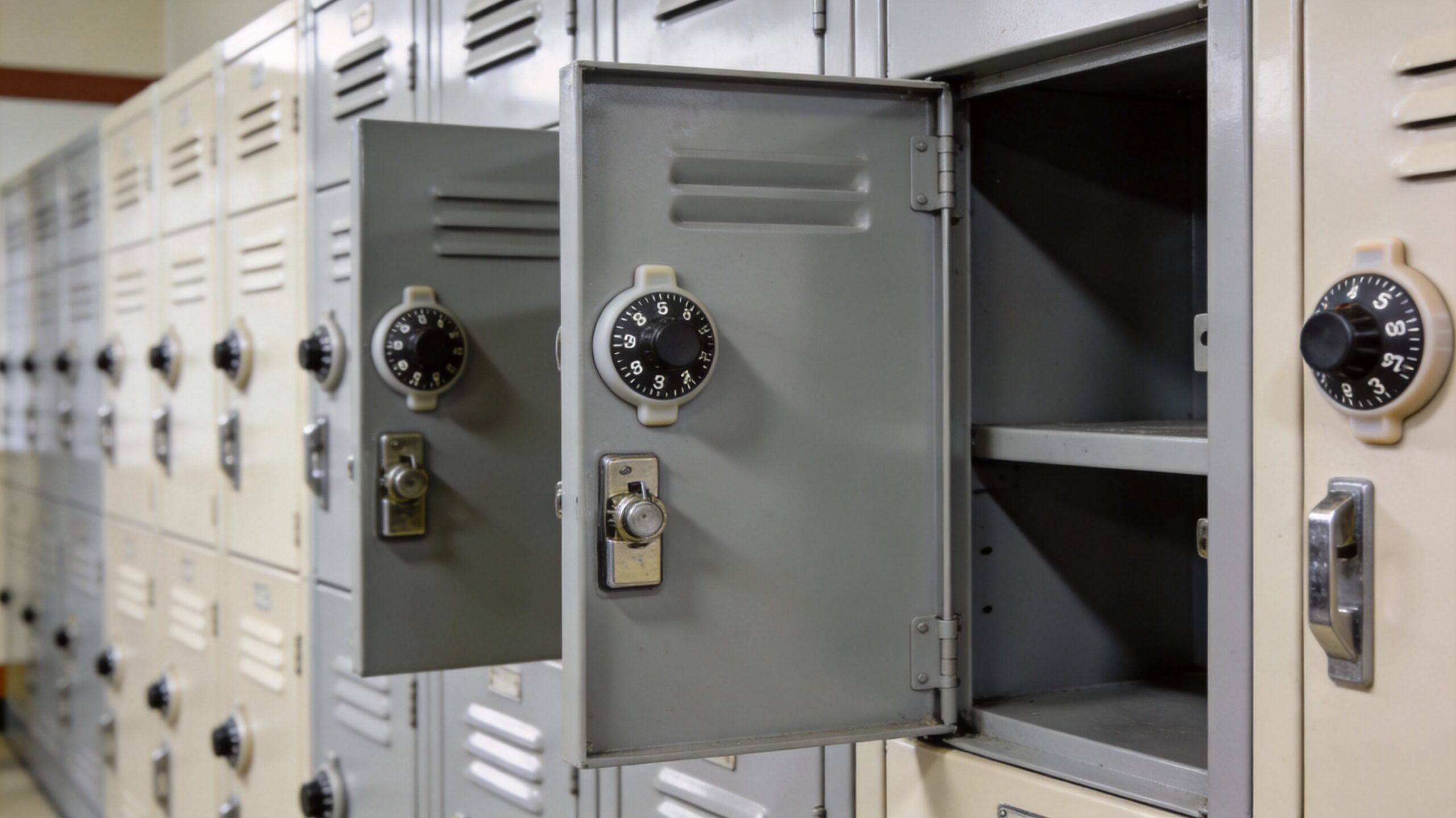
When I talk with procurement officers, facility managers, and athletic directors, one question keeps coming up: how do we secure lockers without breaking the bank or creating a management headache? In my experience, combination locks for lockers have become the go-to solution for schools and gyms nationwide, and for good reason. This guide reflects what I’ve learned from working with these institutions, covering why these locks dominate purchasing decisions, what specs actually matter, and how to build a procurement strategy that holds up over time.
Why Institutions Keep Choosing Combination Locks
The Real Cost of Keys
Let me be blunt: keys are a nightmare in institutional settings. I’ve seen schools with 2,000 lockers spend countless staff hours dealing with lost keys, rekeying, and lockouts. Combination locks for lockers eliminate this entirely. Users memorize a sequence instead of carrying a metal object, which cuts administrative overhead and stops the constant calls to the front office about forgotten keys.
Electronic locks sound appealing, but they come with hidden costs. I’ve watched facilities struggle with battery failures, circuit board issues, and the need for software updates. Combination padlock locker systems are purely mechanical, which means they work during power outages and never need a firmware patch. For institutions that value reliability, mechanical locks are simply the safest bet.
The Financial Picture
Here’s where the numbers really speak. A solid combination padlock locker unit runs between $5 and $15, while electronic locks can set you back $30 to $80 per unit. Over a five-year cycle, that difference adds up fast. Plus, mechanical locks have fewer parts to fail. No batteries to swap, no keyways to re-core, no electronics to short out in a humid gym. In my view, the total cost of ownership is the strongest argument for combination locks for lockers.
What to Look for in a Combination Padlock Locker
Build Quality Matters
Not all locks are created equal, and I’ve tested enough to know the difference. The body should be hardened zinc alloy or laminated steel to resist cutting and prying. The shackle needs to be at least 6.5 mm thick and made of hardened steel; anything thinner can be snapped with bolt cutters. I always recommend checking for ASTM F883 compliance, which is a solid benchmark for padlock security. This industry reference offers more detail on standards.
Resettable vs. Fixed Combinations
This is a decision point I see many teams wrestle with. Resettable locks let users set their own code, which is perfect for gyms where members come and go. But they have more moving parts and can be slightly easier to manipulate. Fixed combination locks come preset from the factory, and the institution controls the records. These are more tamper-resistant and ideal for schools where staff need access for inspections. In practice, I’ve seen many buyers use a mix: fixed for daily school lockers, resettable for gym day-use. If you’re leaning toward fixed, the B301A brass combination padlock is a dependable option from a trusted manufacturer.
Durability in Tough Environments
Gyms are brutal on locks. Moisture, sweat, and temperature swings can wreck cheap hardware. For outdoor or semi-covered areas, check the IP rating; IP54 or higher means decent protection against dust and water. A corrosion-resistant finish, like chrome or powder coating, is essential to prevent rust and keep the dial turning smoothly. From what I’ve seen, skipping this spec leads to premature failures.
Schools vs. Gyms: Different Needs, Same Solution
For K-12 Schools: Security and Oversight
In schools, combination locks for lockers serve two purposes: security and supervision. Teachers and administrators need quick access in emergencies, and fixed combination locks with a master chart allow that without damaging the lock. Keys are a disciplinary headache, and combination locks remove that issue. For younger students, a simple three-digit dial is far easier than a complex electronic interface.
For Gyms: High Traffic and Moisture
Gyms face a different set of challenges. Members use lockers briefly, often multiple times a day. Resettable combination padlock locker systems let them set a temporary code, use the locker, and reset it for the next person. This cuts down on front-desk key management and prevents abandoned locks piling up. Moisture resistance is non-negotiable; I’ve seen locks seize up in chlorine-heavy environments, so sealed dial mechanisms are worth the investment.
A Practical Comparison of Lock Types
Combination vs. Keyed Padlocks
Keyed padlocks are cheaper upfront, but they cost more over time. When a key is lost, the lock gets cut off and replaced. In a single school year, I’ve seen institutions replace 10-15% of their keyed locks. Combination locks have zero replacement cost for lost keys. Plus, a master key system is a security risk if the key is compromised. A master chart, kept in a safe, offers better control.
Combination vs. Electronic Locks
Electronic locks offer remote management and audit trails, but they come at a premium. For a school with 1,500 lockers, the cost gap between mechanical combination locks at $10 each and electronic locks at $50 each is $60,000. That’s a significant budget line. Add in battery replacements every 6-12 months, firmware updates, and network infrastructure, and the costs climb further. In my opinion, smart locks are overkill when a mechanical combination lock meets 95% of security needs. For a deeper dive, this technical reference is a good resource.
Total Cost of Ownership Example
Let me walk you through a real-world scenario. A high school with 1,200 lockers, using combination locks at $8 each, has an initial investment of $9,600. Over 10 years, replacement costs for damage or vandalism might hit 5% per year, totaling $4,800. That’s $14,400 over a decade. Keyed locks at $4 each start at $4,800, but annual key replacement and rekeying average $1,500 per year, totaling $19,800. Electronic locks at $45 each cost $54,000 upfront, plus $2,000 annually for maintenance, totaling $74,000. The math is clear.
Sourcing and Bulk Buying Strategies
How to Vet Suppliers
When sourcing combination locks for lockers, always request samples from at least three suppliers. Test the dials, check the shackle for play, and try to force the lock open. A reputable supplier will offer at least a one-year warranty; some premium brands go up to five years. I also recommend confirming they have a domestic distribution center for fast replacement shipping.
Volume Discounts and Special Features
Bulk purchasing is where you save the most. Most manufacturers offer tiered pricing: 100-499 units at $8 each, 500-999 at $6.50, and 1,000+ at $5.50. For schools, ask about master chart options. For gyms, request locks with a control key feature for emergency access. Reviewing the full product catalog can help you identify eligible models.
Compliance and Safety Standards
Make sure your locks comply with local fire codes and safety regulations. In many areas, lockers must not have locks that prevent emergency access. Combination locks with a master chart satisfy this. Also, check for ANSI/BHMA Grade 1 or Grade 2 certification, which ensures durability against repeated use and forced entry.
Implementation and Management
Distributing Combinations
For schools, assign lockers during registration and give each student a card with their locker number and combination. Keep the master chart in the main office, accessible only to authorized staff. For gyms, post clear instructions at the locker bank and keep a few loaner locks at the front desk.
Handling Replacements and Recodes
Locks will fail or get vandalized eventually. Have spare locks on hand and update the master chart immediately when a lock is replaced. Resettable locks are easy to recode; fixed locks require ordering replacements with the same combination or updating the chart.
Staff Training and Maintenance
Train staff on basic maintenance. A quarterly inspection should check for dial stiffness, shackle corrosion, and body damage. Use dry graphite lubricant, never oil, which attracts dust and gums up the mechanism. With proactive care, a quality combination padlock locker system can last 10-15 years.
FAQs for Procurement Teams
What is the Average Lifespan of a Combination Padlock?
A commercial-grade combination lock used daily typically lasts 7-10 years. With good maintenance, some locks last 15 years or more. The main failure points are dial wear and internal gear stripping, which occur after roughly 50,000-100,000 rotations.
Can Combinations Be Reset After Distribution?
Yes, but it depends on the type. Resettable locks allow users to change the code anytime. Fixed combination locks cannot be reset by the user; they must be returned to the manufacturer or replaced. For institutional use, I prefer fixed locks because they prevent users from choosing weak combinations like ‘123’ or ‘000.’
Are These Locks Tamper-Proof?
No lock is completely tamper-proof, but combination padlock locker systems are highly resistant to casual tampering. Hardened steel shackles resist cutting, and anti-shim features prevent bypass. For high-security areas, consider locks with a deadbolt mechanism rather than a spring-loaded latch. For standard school and gym lockers, a quality combination lock provides sufficient deterrence.
In summary, combination locks for lockers offer the best balance of security, cost, and operational simplicity for schools and gyms. By understanding the specs, comparing total ownership costs, and implementing a structured procurement plan, your institution can deploy a locker security solution that serves your community reliably for years to come.